Blog
Insights
The $200 Billion Gap: Why Emerging Market Agritech Is the Contrarian Opportunity Most Investors Are Ignoring
Agriculture employs 60% of Africa's workforce and gets 4% of its investment. Learn why that $200B gap is a mispriced opportunity and where the real agritech winners are.

Ege Eksi
CMO
Aug 24, 2026
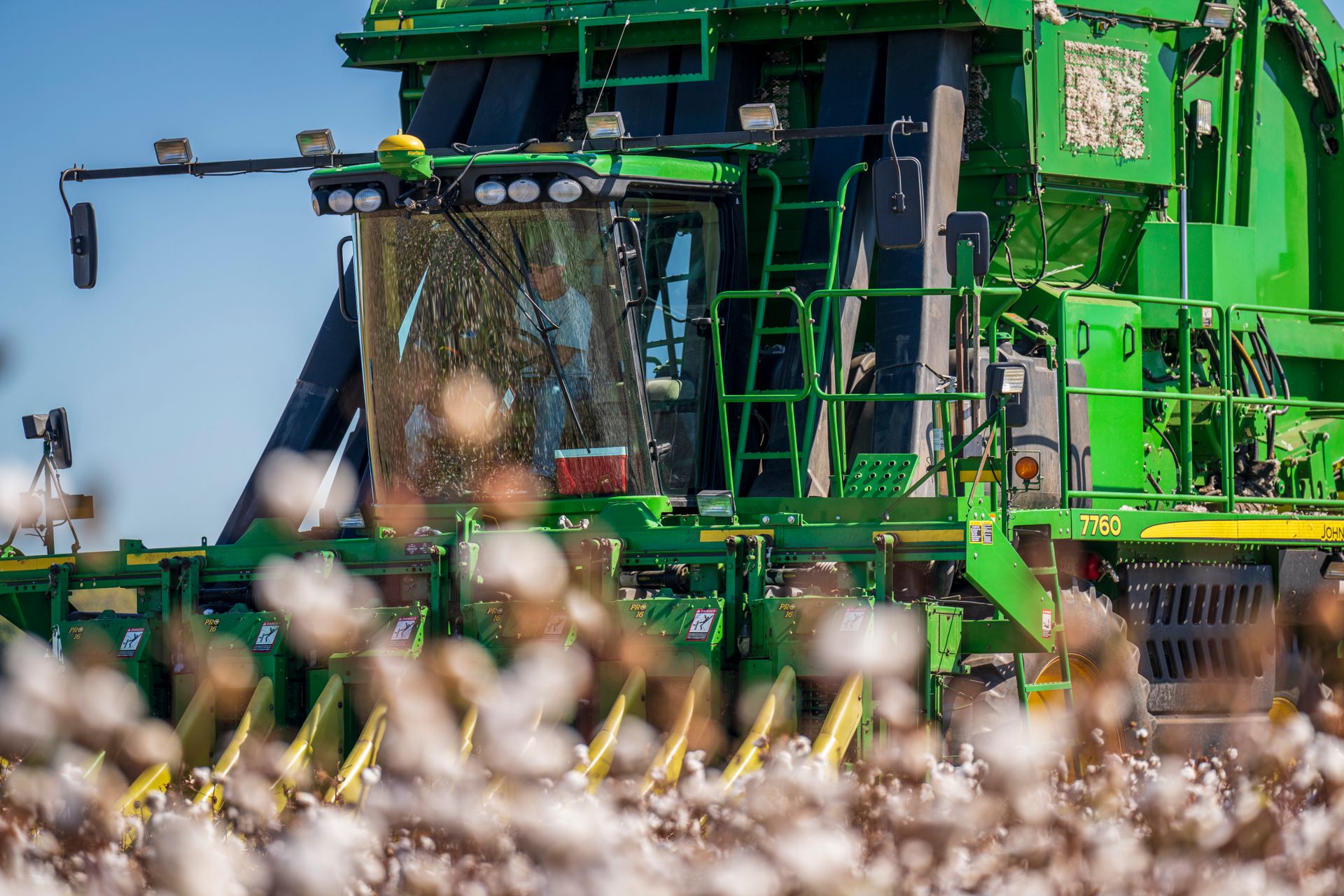
Here is one of the largest mismatches in global investing, stated in a single pair of numbers.
Agriculture employs more than 60% of the workforce across Africa. It receives about 4% of the continent's investment. That gap, between how many people depend on a sector and how little capital flows to it, adds up to an estimated $200 billion funding shortfall. And it persists despite clear evidence that investment in agriculture is two to four times more effective at raising incomes than investment in any other sector.
Most investors read a mismatch like that as a warning. The sophisticated ones read it as a mispricing. When a sector this large, this essential, and this economically productive is this starved of capital, the question worth asking is not whether it is risky. It is whether the risk has been overstated and the opportunity overlooked.
This post makes the honest case for emerging market agritech in 2026. It does not pretend the category is easy, because it is not. But it explains what has genuinely changed, what is actually working now, and why this may be one of the most fundamentally sound and least crowded opportunities available to investors willing to look where the consensus will not.
Start With the Honest Part
A credible case begins by acknowledging what went wrong, and agritech has a real cautionary history that every investor should understand.
Agritech had its hype cycle, and much of it did not work. The global agrifoodtech investment landscape in 2025 is best described as bottomed out but not rebounding, with total funding roughly flat at $16.2 billion, down slightly from the prior year. That is not a booming category. It is a category that overpromised, corrected, and is now being rebuilt on more disciplined foundations.
The specific failure mode is instructive. Many of the agritech companies that raised aggressively were asset-heavy, supply-chain-led businesses that tried to own physical logistics, inventory, and distribution. Those models struggled badly with the economics. One prominent Indian agritech reported revenue of around $150 million against losses of roughly $82 million, a ratio that captures exactly why the asset-heavy approach disappointed investors. Owning the physical supply chain in agriculture is capital-intensive, low-margin, and punishingly hard to scale profitably.
This history matters because it explains why so many investors have written off the category entirely. They are pattern-matching to the asset-heavy failures. But that pattern-matching is precisely what causes them to miss what is actually working now, which looks nothing like the models that failed.
What Is Actually Working: The Divergence Nobody Is Watching
Underneath the flat global headline sits a divergence that tells the real story, and it points directly at emerging markets.
While global agrifoodtech funding declined, developing-markets agrifoodtech grew substantially, rising 63% between 2023 and 2024 against a 4% decline in the global figure. In 2025, investment into African agrifoodtech companies rose 30% to $260 million across 90 deals. The category is not dead. It is relocating, from the developed markets where the easy opportunities are exhausted to the emerging markets where the structural need is greatest and the enabling conditions have finally arrived.
Just as importantly, the money is going to a different kind of company than the ones that failed. The biggest categories attracting capital in African agritech are agri-marketplaces and fintech, the asset-light software and financial layers rather than the asset-heavy logistics businesses. This is the crucial distinction. The winning agritech model in emerging markets is not owning trucks and warehouses. It is providing the digital infrastructure, market access, and financial services that smallholder farmers have never had.
The scale of what these asset-light platforms have already achieved is substantial. B2B platforms have connected 45 million African farmers to markets and facilitated $2.8 billion in digital transactions. Africa's agritech startups collectively raised over a billion dollars across recent years. This is a real, functioning, and growing ecosystem, built on a model that actually works, and it is happening almost entirely outside the attention of mainstream venture capital.
Why Now: The Enabling Infrastructure Finally Exists
The most important question about any contrarian opportunity is why now. Why would emerging market agritech work in 2026 when it was not investable a decade ago? The answer is that the underlying infrastructure crossed a threshold that changed everything.
For a long time, digital agriculture in emerging markets simply was not viable. Smallholder farmers lacked the connectivity, the capital access, and the data infrastructure that made agricultural technology work in developed markets. The tools existed, but the conditions to deploy them did not.
That has changed decisively. Smartphone adoption across sub-Saharan Africa reached around 40% in 2023 and is projected to exceed 50% by the end of the decade. Satellite imagery has become affordable enough to query on demand. Cloud computing costs have fallen to the point where a small team can build sophisticated AI-powered agricultural tools that would have been commercially unthinkable a decade ago. And generative AI has made it possible to deliver expert agricultural advice in local languages, at scale, for almost nothing.
The result is that a problem which genuinely was not investable has become investable, within the span of a few years. A farmer with a smartphone can now receive AI-driven crop advice, disease detection, market prices, and access to credit through a single app. One Indian platform delivers multilingual AI advisory for crop management, livestock care, and disease detection in more than 20 languages, and reports serving over 600,000 farmers. That kind of reach and capability simply did not exist before the infrastructure matured.
This is the leapfrog dynamic that makes emerging markets so compelling across categories, applied to agriculture. These markets are not slowly catching up to developed-world agricultural technology. They are skipping the legacy stages entirely and building directly on smartphones, satellites, cloud, and AI.
The Results Are Real and Measurable
What separates this opportunity from a purely speculative thesis is that the impact is already measurable, and the numbers are strong.
Farmers using these technologies are seeing concrete, quantifiable improvements. Tech-assisted farming operations have recorded yield increases of around 32%, input cost reductions of about 28%, and water usage reductions of roughly 35%. These are not projections or pitch-deck promises. They are documented outcomes, and they explain why adoption is growing organically among farmers who see the results in their own fields and their own incomes.
This matters enormously for the investment case, because it means the demand is grounded in genuine value delivery rather than subsidized growth. A farmer who increases yield by a third and cuts input costs by a quarter has a concrete financial reason to keep using and paying for the technology. That is real, durable, value-based demand, the kind that survives when venture subsidies end and the kind that compounds as word spreads.
Why This Fits a Fundamentals-First Thesis
For investors who have grown cautious about circular financing and speculative valuations elsewhere in the market, emerging market agritech has exactly the qualities that a fundamentals-first thesis prizes.
The demand is structural, not cyclical. Food security is not a trend that fades. The need to feed growing populations, adapt to climate pressure, and raise the incomes of the majority of the workforce in these economies is permanent and intensifying. A company solving these problems is addressing demand that does not evaporate in a downturn.
The revenue is real and external. A farmer or an agribusiness paying for a service that measurably increases their income is the definition of genuine, value-based revenue. There is no circular financing dynamic here, no dependence on the next enormous funding round to manufacture demand. The customer pays because the product makes them money.
And the category is dramatically underfunded relative to its size and importance. The $200 billion funding gap is not just a statistic about unmet need. It is a statement about how little competition exists for the best opportunities. When only 4% of investment flows to a sector employing 60% of the workforce, the disciplined investor who moves into that space faces far less competition for deals and far more reasonable valuations than in the crowded, overfunded corners of the market.
There is even a supportive signal in the broader data. For the first time since records began, the share of global agrifoodtech investment going to first-time-funded companies rose to 46% of the total. Capital is flowing to new entrants, which is exactly what you want to see in a category that is being rebuilt on better foundations.
The Honest Challenges
A responsible case does not hide the difficulties, and emerging market agritech has real ones that investors must underwrite.
The asset-heavy trap is real, and avoiding it requires discipline. The models that failed were the ones that tried to own physical logistics and inventory. Investors need to distinguish clearly between asset-light software and fintech platforms, which have attractive economics, and asset-heavy supply-chain businesses, which have historically destroyed capital. Not all agritech is the same, and the difference in business model is the difference between a good investment and a bad one.
Cycles are long and seasonal. Agriculture moves at the pace of growing seasons, which means sales cycles, adoption, and results all take time. Investors need realistic time horizons and cannot expect the rapid iteration cycles of pure software.
Currency and macro risk apply, as they do across emerging markets. Returns are exposed to currency volatility, and the customer base of smallholder farmers is sensitive to economic shocks. These are real factors to price in.
And smallholder economics require genuine understanding. Investors have often misjudged the risks and overlooked the opportunities of smallholder farmers, who make up the bulk of the farming workforce. Success in this category requires local knowledge and a realistic grasp of how these customers actually behave, which is precisely why the sourcing and evaluation challenge is central.
These challenges are real, but they are also the reason the opportunity stays underpriced. The category demands discipline, patience, and local knowledge, which is exactly why the mispricing persists rather than being competed away.
How SeedScope Helps You Access This Opportunity
Emerging market agritech is concentrated in the exact geographies that mainstream venture capital does not reach, driven by founders with deep local knowledge of specific agricultural markets, and requiring the ability to distinguish the asset-light winners from the asset-heavy traps. Capturing it depends entirely on access to the right founders and the ability to evaluate them properly.
That is what SeedScope provides. With active founders across 30+ countries, filterable by stage, sector, and geography, SeedScope gives investors structured access to the agritech and agrifintech founders building in the emerging markets where the opportunity is greatest and the competition for deals is lowest. The AI-powered valuation benchmarking lets you evaluate these companies against real comparables, so you can identify the ones with genuine unit economics and disciplined valuations rather than relying on guesswork in an unfamiliar category.
The $200 billion funding gap is not a problem for founders alone. It is an opportunity for the investors willing to close it. SeedScope is built to connect you to the founders doing exactly that.
The Bottom Line
Emerging market agritech is one of the clearest examples of a mispriced opportunity in global investing. A sector that employs the majority of the workforce, that is two to four times more effective at raising incomes than any other, and that is starved of capital to the tune of $200 billion, is not risky in the way its neglect suggests. It is overlooked.
The category had its hype cycle and its correction, and the asset-heavy models deserved to fail. But the asset-light software and fintech layer is quietly working, growing in emerging markets even as global agritech stays flat, delivering measurable results to farmers, and building on infrastructure that only recently made the whole thing possible. The demand is structural, the revenue is real, and the competition for deals is minimal.
For investors willing to bring discipline, patience, and local knowledge, or the access to it, this is a fundamentally sound opportunity hiding in plain sight, in the markets the consensus continues to ignore. The gap is the opportunity. The only question is who moves to close it.
Find the agritech and agrifintech founders closing the gap in the markets others overlook. Explore active founders on SeedScope across 30+ countries. Start here →
Ege Eksi
CMO
Share

News
The End of the Pure-Equity Era: What the Rise of Blended Capital Means for Investors in 2026
Sep 2, 2026

Insights
The Most Underused Growth Lever: A Founder's Guide to Pricing in 2026
Aug 31, 2026

Insights
The Term Sheet Decoded: What Every Founder Needs to Understand Before Signing in 2026
Aug 27, 2026